
Nuts & Seeds · Food guide
Can dogs eat almonds?
Sweet almonds aren't toxic, but they're very high in fat. One at most, unsalted. Never bitter almonds.
Not a substitute for advice from your vetUpdated Oct 24, 2026
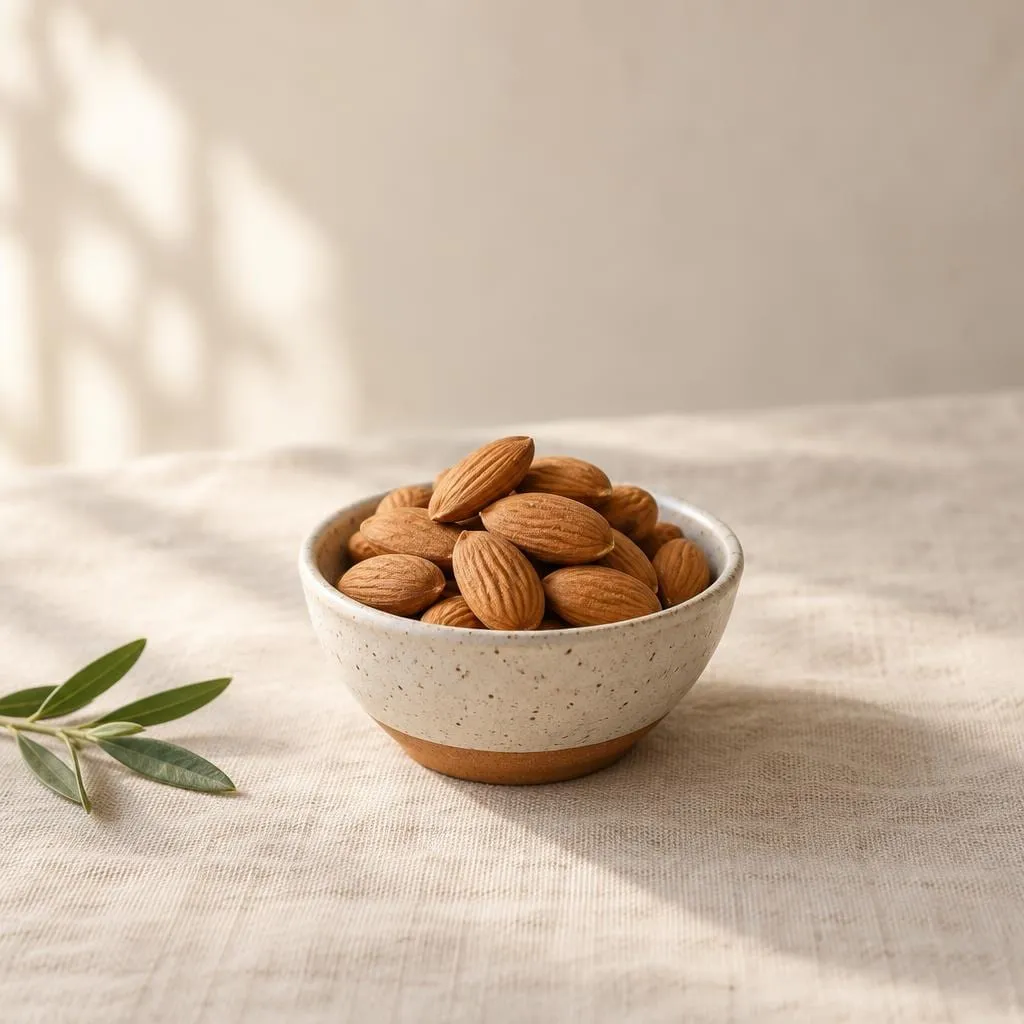 AI image
What's in almonds?
Composition per 100 g
Energy and macros
| Energy | 544 kcal |
| Protein | 22.3 g |
| Fat | 46.6 g |
| Carbohydrates | 3.9 g |
| Fiber | 10 g |
| Water | 5.3 g |
Minerals
| Calcium | 85 mg |
| Phosphorus | 555 mg |
| Ca : P ⓘ | 0.15 : 1 |
| Sodium | 2 mg |
| Potassium | 676 mg |
| Magnesium | 218 mg |
| Iron | 3.1 mg |
| Zinc | 3.2 mg |
| Copper | 902 µg |
| Iodine | 1.1 µg |
Vitamins and fatty acids
| Vitamin A | 20 µg RE |
| Vitamin D | 0 µg |
| Vitamin E | 23.9 mg |
| Linoleic acid | 10.3 g |
| Omega-3 | 0.04 g |
| EPA | 0 g |
| DHA | 0 g |
Source: Max Rubner-Institut. (2025). Bundeslebensmittelschlüssel (BLS), Version 4.0 — Deutsche Nährstoffdatenbank. doi.org
Composition per 100 g
Energy and macros
| Energy | 538 kcal |
| Protein | 22.3 g |
| Fat | 46.6 g |
| Carbohydrates | 3.9 g |
| Fiber | 7 g |
| Water | 8.3 g |
Minerals
| Calcium | 85 mg |
| Phosphorus | 555 mg |
| Ca : P ⓘ | 0.15 : 1 |
| Sodium | 2 mg |
| Potassium | 676 mg |
| Magnesium | 218 mg |
| Iron | 7.2 mg |
| Zinc | 3.9 mg |
| Copper | 1,686 µg |
| Iodine | 1.1 µg |
Vitamins and fatty acids
| Vitamin A | 10 µg RE |
| Vitamin D | 0 µg |
| Vitamin E | 22.5 mg |
| Linoleic acid | 10.3 g |
| Omega-3 | 0.04 g |
| EPA | 0 g |
| DHA | 0 g |
Source: Max Rubner-Institut. (2025). Bundeslebensmittelschlüssel (BLS), Version 4.0 — Deutsche Nährstoffdatenbank. doi.org
Key facts at a glance
What to watch out for
- Never bitter almonds: they release cyanide and are considered toxic (ASPCA)
- Lots of fat: vomiting, diarrhea and possibly pancreatitis (ASPCA)
- Whole almonds can block the esophagus or intestines, especially in small dogs
- No salted or seasoned almonds, no almond butter with sugar or xylitol
How to feed almonds the right way
- 1If at all, a single sweet almond, chopped
- 2Keep bitter almonds and bitter almond extract out of reach
Safety rating for each dog
Can Romeo handle almonds?
This page applies to dogs in general. In Kahuno, you add intolerances to the dog profile, and every ingredient gets a color-coded dot when you log it, checked for your dog specifically. Whoever feeds the dog in your household sees it right away.
Frequently asked questions
Are almonds toxic to dogs?
According to the ASPCA, sweet almonds, the regular almonds you eat, aren't toxic. Still, the ASPCA puts nuts, almonds included, on its list of foods you shouldn't give pets: their high fat content can cause vomiting, diarrhea and pancreatitis. Bitter almonds, on the other hand, contain a compound that releases cyanide and are considered toxic.
My dog ate almonds. What should I do?
If it was bitter almonds or bitter almond extract, call your vet right away: cyanide poisoning often sets in just 10 to 60 minutes after ingestion (Merck Veterinary Manual). If it was one or two sweet almonds, there's no need to panic, according to the American Kennel Club. If your dog got hold of a lot or is small, watch for vomiting, diarrhea, gagging and belly pain, and call if you see any of these signs.
What's the difference between sweet and bitter almonds?
Bitter almonds contain about 40 times as much cyanide-releasing compounds as sweet almonds (Chaouali et al. 2013), mainly amygdalin (AGES). That's why you should keep bitter almonds and bitter almond extract out of reach.
How many almonds can a dog eat?
No expert source gives a safe amount. Even a few almonds pack a lot of fat, so one sweet almond at most, as a rare exception. Dogs with pancreatitis shouldn't get any, because they need low-fat food (Merck).
Other people also wanted to know
All foods PeanutIn moderationYes, unsalted and in small amounts. Peanut butter only if it has no salt, sugar or xylitol.620 kcal / 100 gMore →
 WalnutDon't feedFresh or unripe walnuts can contain mold that produces a toxin. This toxin is highly toxic to dogs.no nutrition factsMore →
 MacadamiaDon't feedMacadamia nuts are toxic to dogs. As little as 0.7 g per 1 kg of body weight can cause poisoning, with weakness in the hind legs, trembling and vomiting.no nutrition factsMore →
Sources
- ASPCA Animal Poison Control: People Foods to Avoid Feeding Your Pets, Abschnitte „Nuts/Fatty Foods" und „Salt/Excessively Salty Foods". Abgerufen am 24.10.2026.
- ASPCA: Internet Myths and Rumors, Pet Toxin Edition (23.08.2016), Abschnitt „MYTH: Almonds are toxic to my pet", süße gegen bittere Mandeln. Abgerufen am 24.10.2026.
- Merck Veterinary Manual: Houseplants and Ornamentals Toxic to Animals (Nov 2023), Abschnitt „Toxicity to Animals of Cyanogenic Glycoside Plants", Prunus spp. einschließlich Mandel. Abgerufen am 24.10.2026.
- Merck Veterinary Manual: Pancreatitis and Other Disorders of the Pancreas in Dogs, Abschnitt „Inflammation of the Pancreas", fettarme Ernährung. Abgerufen am 24.10.2026.
- Chaouali et al. 2013, ISRN Toxicology, Evaluation of cyanide content in bitter and sweet almonds, Bittermandeln mit rund 40-mal höherem Cyanidgehalt als süße Mandeln. Abgerufen am 24.10.2026.
- AGES: Blausäure (aktualisiert 25.11.2025), Amygdalin als dominantes cyanogenes Glykosid in Bittermandeln. Abgerufen am 24.10.2026.