It Tastes So Good: Why Almost Every Other Dog in Germany Is Overweight
We've all been there: your dog gives you those big, trusting eyes, your heart melts, and you think, "Oh, one treat won't hurt." The truth is, many dog owners in Germany consistently underestimate how much their dog actually weighs.
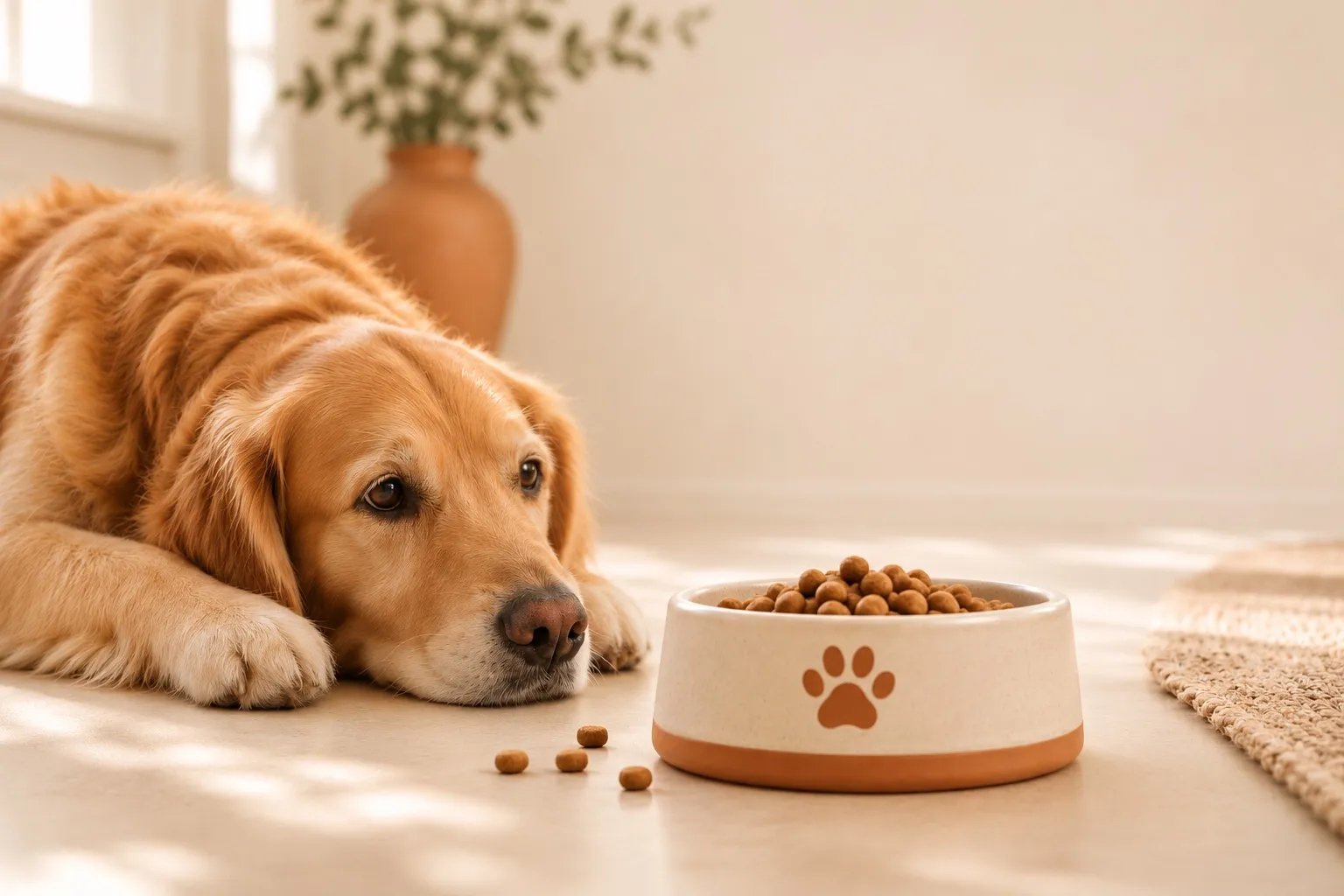 AI image
Overweight: Far from a rare case
An article from the Clinic of Small Animal Medicine at LMU Munich, published in Der Praktische Tierarzt in 2023, reaches a clear conclusion: based on current research, up to 65% of dogs and cats in Germany are overweight (Kölle et al. 2023). The authors also stress that obesity is the most common nutrition-related disease in our pets, with serious health consequences such as joint disease, heart and circulatory problems, diabetes, and a life expectancy that is two to three years shorter on average.
Especially striking: according to HUNTER magazine, the trend has been rising for the last 30 years. So overweight dogs aren't a fringe issue. It's a trend that has been getting worse for decades (HUNTER Magazin, 2026).
The real problem: Owners often don't notice
Why is this trend so hard to stop? A representative Forsa survey commissioned by Uelzener Versicherung offers a plausible explanation: 87% of the dog owners surveyed said their dog had no weight problem, and only 8% rated their dog as too heavy (Forsa/Uelzener Versicherung, 2022). This huge gap between perceived and actual weight is probably one of the main reasons the situation has barely improved over the years. A problem nobody sees doesn't get treated.
How can you tell if your dog is overweight?
Unlike with people, there's no Body Mass Index for dogs that turns height and weight into a simple formula. The differences between breeds are too big for that. Instead, vets use the Body Condition Score (BCS), a nine-point scale for assessing body fat:
- BCS 4–5: Ideal weight
- BCS 6–7: Overweight
- BCS 8–9: Obese
In numbers: a dog counts as overweight at just 10% above its ideal weight, and as obese from 20% (Kölle et al. 2023). For a medium-sized dog with an ideal weight of 15 kg, just one and a half kilos too many is enough to slip into the critical range.
A simple rule of thumb you can use at home: lay both hands flat on your dog's rib cage. You should be able to feel the ribs easily without them sticking out visibly. Seen from above, there should be a visible waist. From the side, the belly should tuck up slightly.
Why do dogs become overweight in the first place?
Weight gain comes from a constant energy surplus: the dog takes in more calories than it burns (Kölle et al. 2023). The most common causes:
- Imprecise feeding. Measuring cups or eyeballing instead of a kitchen scale lead to big swings in portion size.
- Extra food on the side. Treats, chews and table scraps often aren't subtracted from the main ration. They often make up a large share of daily energy needs, without owners seeing them as a real meal.
- Neutering. It lowers the resting metabolic rate by 20 to 30% in both males and females, while appetite goes up at the same time.
- Age. Older dogs usually move less and need less energy.
- Breed predisposition. Labradors and other retriever breeds, Beagles, Cocker Spaniels, Dachshunds and Rottweilers in particular are more prone to gaining weight.
- Showing love through food. Many owners feel that skipping snacks means withholding affection, which makes overfeeding more likely.
What are the health consequences of being overweight?
In dogs, excess weight isn't a cosmetic issue. It's a disease in its own right, with consequences that can be serious (Kölle et al. 2023):
- Joint disease such as osteoarthritis and a higher risk of a cruciate ligament tear
- Diabetes mellitus due to insulin resistance
- Heart and circulatory disease and lower heat tolerance
- Urinary tract disease
- A higher anesthesia risk during vet procedures
- A life expectancy that is two to three years shorter on average
How to prevent it
- Weigh portions exactly instead of eyeballing or using a measuring cup. Otherwise, portions can vary by up to 28%.
- Count the treats. Snacks and chews should come out of the daily ration, not on top of it.
- Track feeding instead of guessing. If you keep track of what your dog actually gets, especially in households with several people, you'll catch problems sooner.
- Regular exercise, suited to age and breed.
- Check weight monthly to spot trends early.
The bottom line
Weight gain in dogs usually creeps up slowly: imprecise portions, extra snacks and no real overview of what the dog actually gets each day. That's exactly where prevention starts. If you track feeding on purpose, weigh portions exactly and keep an eye on weight regularly, you can give your dog a long, healthy life. With Kahuno, that fits right into your everyday routine: scan the food, log the amount, done.
This post is not a substitute for veterinary advice. If your dog has eaten something toxic, call your vet or an emergency vet.

Kahuno looks after your dog with you.
Log feedings, keep an eye on daily needs. Free on the App Store and Google Play.
Sources
- Kölle P, Baum L, Ziese A-L, Moritz J (2023): Adipositas bei Hund und Katze – ein unterschätztes Tierschutzproblem. Der Praktische Tierarzt 104, Heft 1/2023, S. 20–31. Review article from the Clinic of Small Animal Medicine at LMU Munich. Retrieved Nov 4, 2026