Moro's Carrot Soup for Dogs: Quick Help for Diarrhea
Moro's carrot soup can be a good support when your dog has mild diarrhea. Where the recipe comes from, how to make it dog-friendly, how many calories it has and when you should call your vet right away.
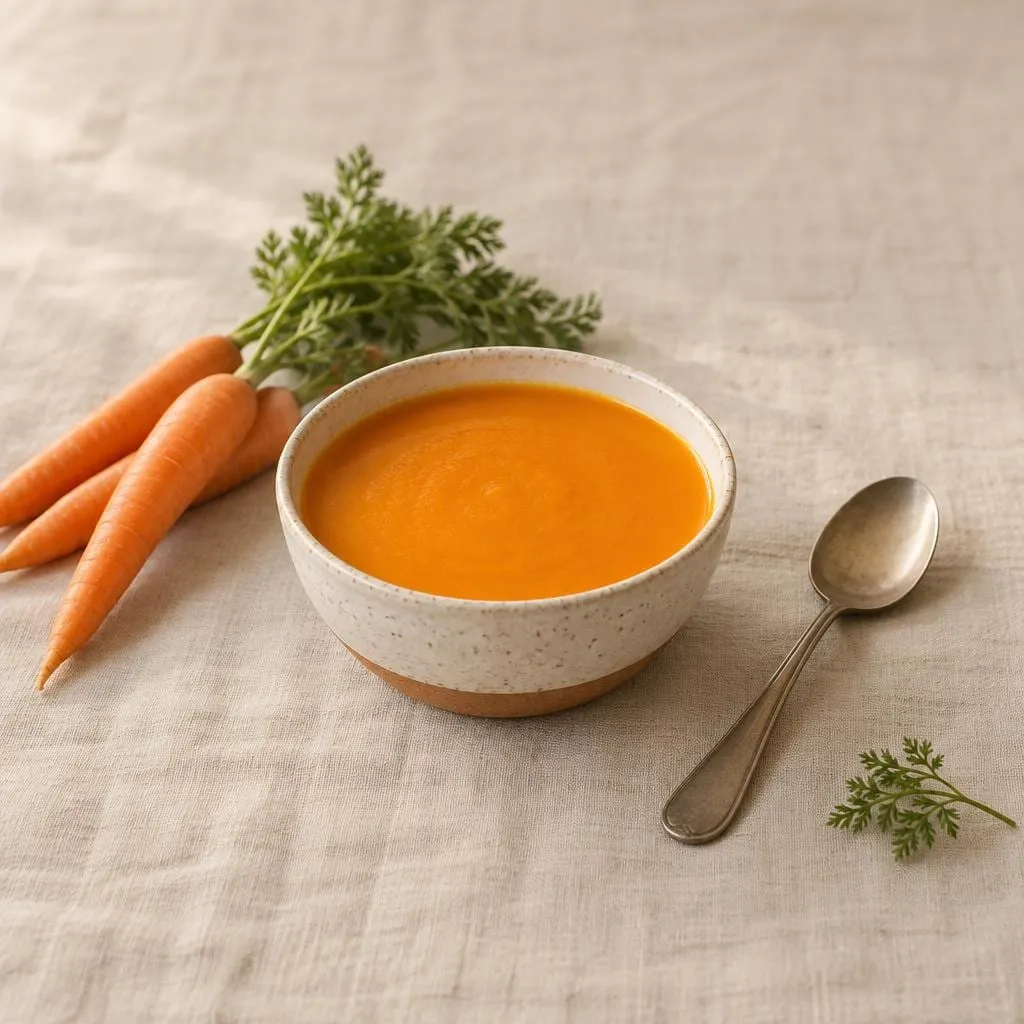 AI image
Moro's carrot soup can be a good support for a dog with mild diarrhea: it provides fluids, is gentle on the gut and is often happily accepted even by dogs with little appetite. But it doesn't replace veterinary treatment and should only be given as a supportive measure for stomach and gut trouble.
Who invented the soup and how it works
The soup was developed by Ernst Moro, a pediatrician in Heidelberg, who created it in 1908 as a treatment for infants with diarrhea. Later it caught on as a home remedy for dogs.
What makes the soup special is the long cooking time. It breaks down the cell walls of the carrots and releases pectin building blocks called oligogalacturonic acids. According to the common explanation, they can attach to certain diarrhea-causing germs and make it harder for them to latch onto the gut wall. On top of that, the soup provides fluids and easily digestible carbohydrates.
Important to keep in mind: this mechanism comes from lab research in pediatrics. There are hardly any studies specifically in dogs. The soup is considered a proven, well-tolerated home remedy and does not replace veterinary treatment. With diarrhea, replacing lost fluids and salts remains the most important thing.
The recipe for dogs
For about one liter of soup, all you need is carrots and water.
Ingredients
- 500 g carrots (as fresh as possible, organic if you like)
- 1 liter water
- Extra boiled water
Instructions
- Wash, peel and cut the carrots into small pieces or slices.
- Put them in a pot with one liter of water, cover and simmer gently for about an hour until the carrots are completely soft.
- Purée the carrots together with the cooking water until very smooth, so the pectin building blocks end up in the soup.
- Top up to 1 liter again with boiled water, since quite a bit of liquid evaporates during the long cooking time.
- Let it cool completely. Never give the soup to your dog hot.
Feeding tips
- Give the soup in small portions spread throughout the day. Little and often is better than a lot at once. It's easier on the stomach.
- As a rough guide, a few tablespoons per portion are enough for small dogs, and large dogs can have a bit more. If you're unsure, ask your trusted vet about the right amount.
- Always keep fresh drinking water available as well.
- Once your dog's appetite comes back, you can add some cooked rice and lean cooked chicken (no skin, bones or seasoning) to turn it into a bland diet.
- Covered in the fridge, the soup keeps for about one day. Bring it to room temperature before feeding.
How many calories does the soup have?
Moro's carrot soup has only about 15 to 20 kcal per 100 g. The 500 g of carrots provide roughly 150 to 200 kcal, spread over about one liter of soup. Water adds no calories.
That makes the soup very low in energy. For example, a medium-sized dog weighing 20 kg needs, as a rough estimate, around 1,000 kcal a day. A whole liter of soup covers only about 15 to 20 percent of that. That's why it's an add-on for one to two days, not a long-term meal. After that, your dog should get more substantial food again, starting with a bland diet.
When it helps and when it doesn't
The soup makes the most sense for an adult, otherwise healthy dog with mild diarrhea who is alert, drinking and showing no other symptoms.
| Situation | Assessment |
|---|---|
| Adult dog, mild diarrhea, alert and drinking | A good, gentle addition to water and a bland diet |
| Puppies, very small dogs, seniors | Check with your vet first, they dehydrate quickly |
| Dogs with preexisting conditions (for example diabetes, kidney or heart disease) | Only after talking to your vet |
| Diarrhea with vomiting, fever or lethargy | Not enough, see your vet soon |
| Blood in the stool or diarrhea lasting several days | Have the cause checked, the soup doesn't replace a diagnosis |
Keep three things in mind:
- Don't give electrolyte drinks or human medications without your vet's instructions. Some contain sugar, sweeteners like xylitol or active ingredients that are dangerous for dogs.
- The soup is not a substitute for veterinary treatment. It hasn't been shown to shorten diarrhea, but it makes the time until your dog feels better easier to get through.
- After the diarrhea, switch your dog back to their regular food gradually. Mix it into the bland diet slowly over several days.
When to see your vet
Call your vet as soon as there are signs of dehydration or a more serious illness. For puppies, small dogs and older dogs, call especially early.
- Puppies, very small or older dogs with diarrhea
- Blood in the stool, black tarry stool or repeated vomiting
- Noticeable tiredness, weakness or listlessness
- Your dog refuses food and water
- Dry, sticky or pale gums; a skin fold at the back of the neck that only slowly flattens after you lift it
- Fever, a bloated or painful belly
- Suspicion that your dog has eaten something toxic or swallowed a foreign object
- Diarrhea lasting longer than 24 to 48 hours
When in doubt, it's better to call once too early than too late.
The bottom line
Moro's carrot soup is a simple, inexpensive and usually well-tolerated home remedy that can help your dog get back on their feet quickly when they have mild diarrhea. Give it alongside plenty of fresh water and a bland diet. For puppies, small or older dogs, and whenever other warning signs show up, leave the decision to your vet.
This post is not a substitute for veterinary advice. If your dog has eaten something toxic, call your vet or an emergency vet.

Kahuno looks after your dog with you.
Log feedings, keep an eye on daily needs. Free on the App Store and Google Play.